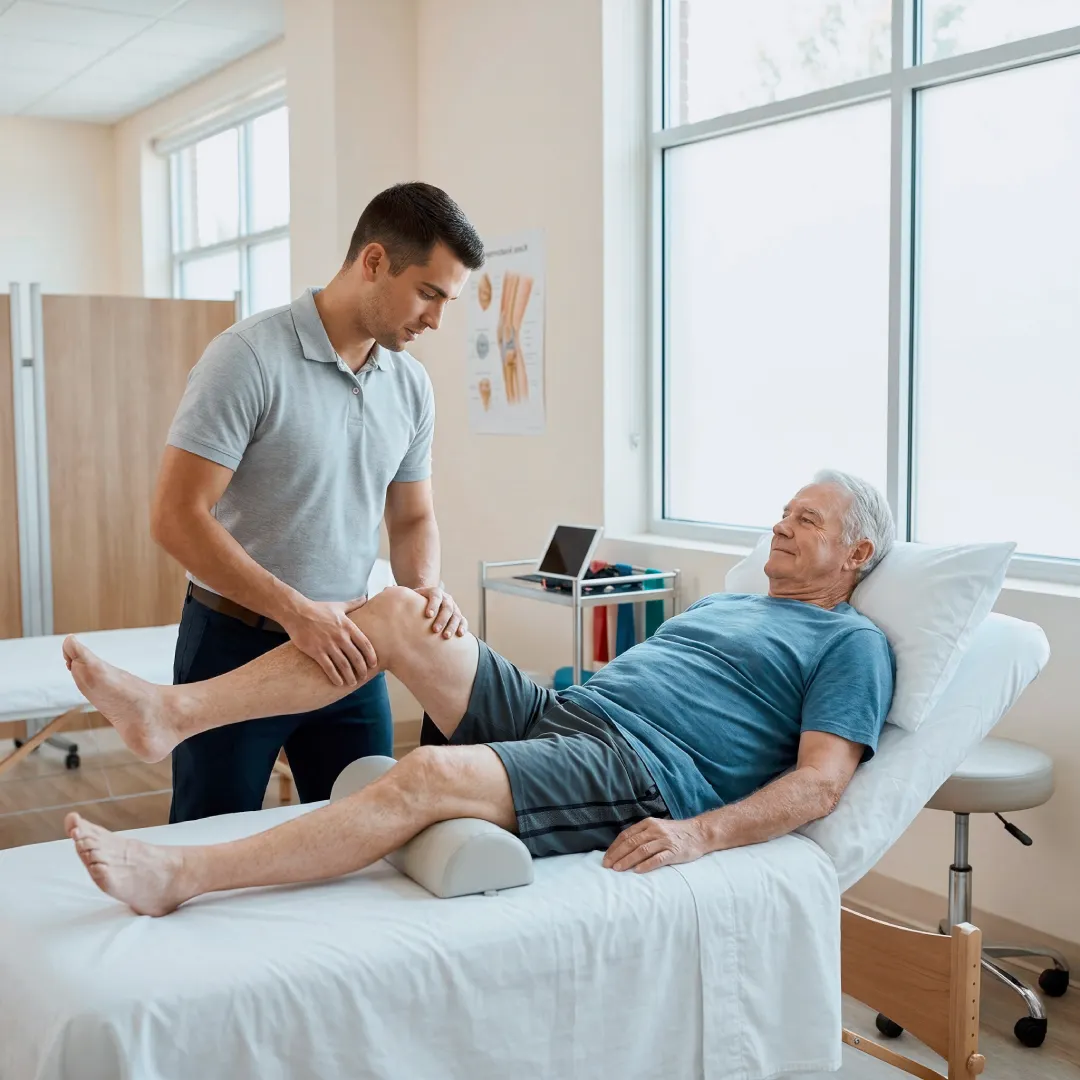
7 Facts You Should Know About Physiotherapy for Older Adults
Staying Active and Mobile as You Age
Getting older can bring changes in muscle strength, balance, flexibility, and joint movement. These changes may make everyday activities such as walking, climbing stairs, standing from a chair, or carrying groceries more difficult.
However, reduced mobility does not have to mean giving up the activities you enjoy. With suitable movement strategies and clinical support, many older adults can continue participating in daily routines and physical activities.
For seniors in Mississauga, physiotherapy can provide support for movement concerns involving muscles, joints, balance, strength, and mobility. At Field Me Athletic Therapy, appropriate care can help older adults maintain movement and stay active in their daily lives. Here are seven facts older adults and their families should know.
1. Age Does Not Mean You Should Stop Moving
Physical changes are a normal part of aging, but staying active remains important. Muscle strength can decrease over time, and joints may become stiffer, but regular movement can help maintain physical function.
Walking, gentle strengthening, mobility exercises, and balance activities can all play a role in an active lifestyle.
Physiotherapy may help identify movement limitations and create an exercise plan based on an individual’s current abilities. The focus does not need to be on intense workouts. Simple movements related to everyday activities can be useful.
2. Strength Is Important for Everyday Tasks
Muscle strength helps with daily activities such as standing, walking, climbing stairs, carrying groceries, and getting into a vehicle. Reduced strength can make these tasks harder.
Exercises may use body weight, resistance bands, or light weights, focusing on areas such as the legs, hips, core, back, and arms. The exercises can be adjusted to match each person’s abilities.
.
3. Balance Should Not Be Ignored
Balance can change with age due to muscle weakness, joint stiffness, vision changes, or previous injuries. Poor balance may increase the risk of falls.
Exercises can focus on stepping, weight shifting, strength, and stability. If an older adult feels unsteady or has experienced a fall, an assessment may help identify areas that need attention.
4. Joint Stiffness Does Not Always Mean Avoiding Movement
Knee, hip, shoulder, ankle, and back stiffness are common concerns among older adults. When movement feels uncomfortable, it can be tempting to reduce activity.
However, avoiding movement completely may contribute to reduced mobility and physical capacity.
The right approach depends on the reason for the stiffness. Some people may benefit from mobility exercises, strengthening, activity changes, or gradual increases in movement.
Physiotherapy may be considered when stiffness begins affecting walking, dressing, bathing, reaching, using stairs, or getting in and out of a chair.
Persistent symptoms should not automatically be dismissed as an unavoidable part of getting older.
5. Recovery After Injury May Need Extra Attention
Older adults may need additional support after an injury due to changes in strength, mobility, or existing joint concerns. A gradual rehabilitation plan may include strength, balance, mobility, and walking exercises to support a return to daily activities.
Severe swelling, deformity, inability to bear weight, or major neurological symptoms require prompt medical assessment.
6. Everyday Activities Can Be Part of Rehabilitation
Rehabilitation does not have to focus only on exercises performed during an appointment.
For older adults, everyday tasks can be an important part of physical goals. These may include preparing meals, walking around the neighbourhood, climbing stairs, standing in the shower, carrying household items, or getting out of bed.
Physiotherapy can incorporate movements that relate to these activities.
For example, someone struggling with stairs may benefit from exercises that address leg strength, balance, stepping, and controlled weight transfer.
Connecting exercise with daily activities can make it easier to apply movement strategies outside the clinic.
7. You Do Not Always Need to Wait for Severe Symptoms
Some people seek care only after a movement problem has been present for a long time. However, an assessment may help identify contributing factors before a concern begins having a larger effect on daily life.
Occasional muscle soreness can occur after exercise, gardening, household work, or an unfamiliar activity. It may settle as the body recovers.
Persistent or recurring symptoms are different.
Consider speaking with a healthcare professional when uncomfortable:
- Continues for several weeks
- Keeps returning
- Interferes with sleep
- Makes walking difficult
- Affects stairs
- Limits household activities
- Is accompanied by weakness
- Changes the way you move
- Follows an injury
- Makes exercise difficult
Signs You May Need Physiotherapy for Persistent Muscle Pain
Muscle discomfort can follow exercise, prolonged sitting, or daily activities. If pain continues for weeks, keeps returning, affects sleep, limits movement, or changes how you walk, an assessment may be useful.
A clinician can check strength, mobility, flexibility, joint function, and movement patterns. Seek prompt medical care for sudden severe pain, major swelling, weakness, fever, breathing problems, or symptoms after significant trauma.
Is Physiotherapy Necessary for Recurring Joint Pain?
Not every episode of joint discomfort needs physiotherapy, and mild symptoms may settle with rest and activity changes. However, recurring joint pain that affects walking, stairs, reaching, or daily activities may need an assessment.
A clinician can check joint movement, strength, balance, and movement patterns. Treatment may include mobility exercises, strengthening, functional movements, and activity adjustments.
Seek prompt medical care for severe pain, major swelling, fever, deformity, inability to bear weight, or symptoms after a serious injury.
When Should an Older Adult Consider an Assessment?
There is no specific age at which someone needs physiotherapy. The decision can depend on symptoms and their effect on everyday life.
An assessment may be worth considering if an older adult experiences:
- Difficulty walking as far as usual
- Trouble standing from a chair
- Increasing difficulty with stairs
- Repeated balance problems
- Muscle weakness
- Persistent muscle discomfort
- Recurring joint symptoms
- Reduced shoulder, hip, or knee movement
- Difficulty returning to exercise
- Movement changes after an injury
Family members may also notice changes first. Holding onto furniture while walking, avoiding stairs, reducing outings, or struggling with household tasks can indicate that mobility has changed.
What Happens During an Appointment?
An initial appointment typically involves discussing the person’s symptoms, medical history, daily activities, and physical goals.
The clinician may assess strength, flexibility, balance, walking, joint movement, and other relevant physical functions.
Based on the findings, an exercise and rehabilitation plan may be recommended.
For older adults, the plan can focus on practical activities rather than athletic performance. Exercises can be introduced at a manageable level and adjusted as physical capacity changes.
Communication is also important. Older adults should be encouraged to discuss movements that cause difficulty and the activities they want to continue doing.
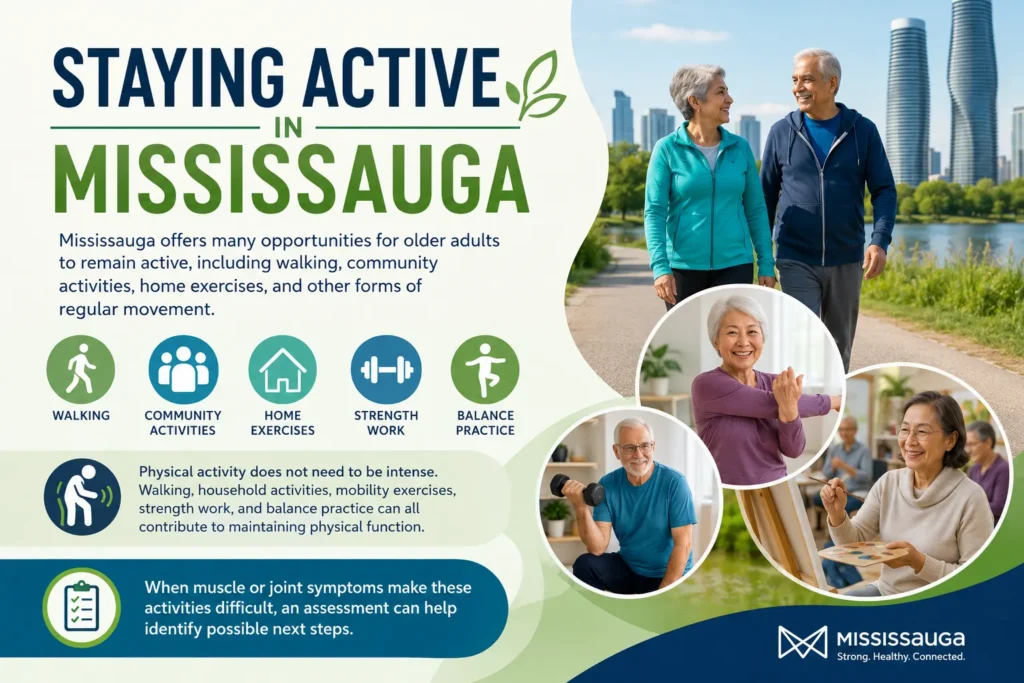
Staying Active in Mississauga
and other forms of regular movement.
Physical activity does not need to be intense. Walking, household activities, mobility exercises, strength work, and balance practice can all contribute to maintaining physical function.
When muscle or joint symptoms make these activities difficult, an assessment can help identify possible next steps.
Frequently Asked Questions
1. Is physiotherapy suitable for older adults?
Yes. Older adults may seek care for mobility concerns, muscle weakness, joint symptoms, balance difficulties, injuries, and changes in physical function. The approach should reflect the individual’s current abilities and health circumstances.
2. How often should an older adult attend appointments?
There is no fixed schedule. Appointment frequency can depend on symptoms, goals, physical capacity, home exercises, and progress. A clinician can discuss scheduling after an assessment.
3. Can older adults exercise with joint pain?
Some people with joint symptoms can remain physically active, but suitable activities depend on the cause and severity of the symptoms. An assessment can help identify appropriate movements and activities that may need modification.
4. Can physiotherapy help with balance concerns?
Balance exercises may be included for people who experience instability, difficulty walking, or problems with stepping and changing positions. Exercises may focus on strength, coordination, stability, and functional movement.
5. When should muscle or joint pain be medically assessed?
Sudden severe symptoms, major swelling, deformity, inability to bear weight, significant weakness, fever, breathing difficulties, chest symptoms, or symptoms after major trauma should receive prompt medical attention. Persistent or recurring symptoms that interfere with daily activities should also be discussed with a healthcare professional.
Connect With Field Me Athletic Therapy
Changes in strength, balance, mobility, or joint function can affect how older adults move through their daily lives. These changes do not always mean that normal activities need to stop.
If you are in Mississauga and dealing with persistent muscle discomfort, recurring joint symptoms, balance concerns, weakness, or reduced mobility, Field Me Athletic Therapy can help you discuss your concerns and explore suitable rehabilitation options.
Contact Field Me Athletic Therapy to schedule an assessment and take the next step toward improving your day-to-day movement.