5 Training Errors our Athlete Rehabilitation Clinic Can Help Correct
Why Your Recovery May Be Slower Than Expected
Have you ever felt like you’re putting in the work, following your training plan, and still not getting back to where you were? You’re not alone. Many athletes assume recovery simply takes time, but the real issue is often hiding in everyday training habits. Our athlete rehabilitation clinic can uncover problems that aren’t always obvious, even to experienced athletes.
It’s common to search for answers after an injury lingers longer than expected or keeps coming back. What surprises many people is that recovery isn’t always slowed by the injury itself. Small decisions made during training can quietly delay progress for weeks or even months. Before you push through another workout, it’s worth finding out whether one of these overlooked mistakes is standing in your way.
Why Recovery Stalls Even When You’re Training Hard
Working harder doesn’t always move recovery forward. In fact, doing more can sometimes create another setback when your body hasn’t had enough time to adapt.
Many athletes focus on rebuilding strength as quickly as possible. While motivation is important, recovery also depends on how tissues heal, how joints move, and how muscles work together. Missing one of these pieces can make progress feel frustratingly slow.
Some of the most common reasons recovery stalls include:
- Returning to full training too soon is one of the most common reasons recovery stalls.
- Ignoring discomfort because it seems minor.
- Continuing exercises with poor movement patterns.
- Skipping structured rehabilitation after an injury.
- Believing soreness always means progress.
Our athlete rehabilitation clinic looks beyond the painful area to identify why recovery keeps slowing down. Occasionally the real issue starts somewhere entirely different, such as limited hip mobility affecting the knee or reduced ankle movement changing the way you run.
Instead of guessing, identifying these hidden factors makes it easier to move forward with confidence.
Here are five training errors that our athlete rehabilitation clinic can help correct.
Returning Before Your Body Is Ready
Missing practices or competitions can be frustrating. That’s why many athletes return as soon as the pain starts fading.
The problem is that pain isn’t always an accurate sign that recovery is complete. Muscles, tendons, and joints may still be rebuilding even though they feel much better.
Returning too soon often leads to:
- Repeated setbacks.
- Reduced performance.
- New injuries caused by compensation.
- Longer recovery than expected.
Our athlete rehabilitation clinic measures strength, movement, balance, and function before increasing activity. This approach helps athletes progress at a pace their body can actually handle instead of relying on guesswork.
Ignoring Movement Quality During Training
Many people pay close attention to how much weight they lift or how fast they run. Far fewer notice how they move while doing it.
Small changes in posture, balance, or technique often develop after an injury. At first, these adjustments may seem harmless. Over time, they place extra stress on other muscles and joints.
You might notice:
- One leg is working harder than the other.
- Reduced balance.
- Awkward landing mechanics.
- Limited range of motion.
- Uneven strength.
These changes don’t always cause immediate discomfort, which makes them easy to overlook.
Our athlete rehabilitation clinic examines movement patterns from head to toe rather than focusing only on the injured area. Correcting movement quality early may reduce unnecessary strain before it develops into another setback.
Repeating Exercises That Continue to Cause Pain
Many athletes believe that if an exercise hurts, repeating it will eventually make the discomfort disappear.
Unfortunately, that’s not always how recovery works.
Pain can signal that the body isn’t ready for a certain movement, that technique needs adjustment, or that another issue is contributing to the problem. Continuing without identifying the cause may only increase irritation.
Instead of forcing the same routine every day, rehabilitation focuses on finding movements your body can tolerate while gradually building strength and confidence.
Our athlete rehabilitation clinic can determine whether an exercise simply needs to be modified, temporarily replaced, or progressed differently based on how your body responds.
Even a small adjustment can make a noticeable difference in how comfortably you move over the following weeks.
Skipping Recovery Days
It’s easy to believe that taking a day off means falling behind. Many athletes worry they’ll lose progress if they aren’t constantly training.
In reality, recovery days are when your body adapts to the work you’ve already done. Without enough time to recover, muscles stay fatigued, movement quality declines, and performance often starts to plateau.
Common signs that recovery is being overlooked include:
- Feeling fatigued before each workout is a common sign of inadequate recovery.
- Persistent muscle soreness.
- Slower reaction times.
- Reduced training intensity.
- Minor aches that never fully disappear.
Our athlete rehabilitation clinic helps determine how much activity your body can handle while still allowing recovery to take place. The goal isn’t to stop training altogether but to create a progression that supports steady improvement.
Training Around Pain Instead of Addressing It
Many athletes change the way they move just to avoid discomfort. It seems like a simple adjustment, but compensation often shifts extra stress onto other muscles and joints.
You may notice yourself favoring one side, shortening your stride, or avoiding certain movements without thinking about it.
Over time, these changes can lead to:
- Muscle imbalances.
- Reduced flexibility.
- Joint stiffness.
- New areas of discomfort.
- Declining athletic performance.
Our athlete rehabilitation clinic identifies these compensations before they become long-term habits. By correcting movement patterns early, athletes can return to training with greater confidence and fewer recurring setbacks.
Why Athletic Rehabilitation Matters More Than Many Athletes Realize
Many people think rehabilitation begins and ends with treating an injury. In reality, athletic rehabilitation looks at how your entire body works together during movement.
Recovery is rarely about one muscle or joint. Every movement depends on strength, mobility, stability, coordination, and control working together.
An athlete rehabilitation clinic may include
- Detailed movement assessments.
- Joint mobility testing.
- Muscle balance evaluation.
- Progressive strength development.
- Functional movement retraining.
- Return-to-sport planning.
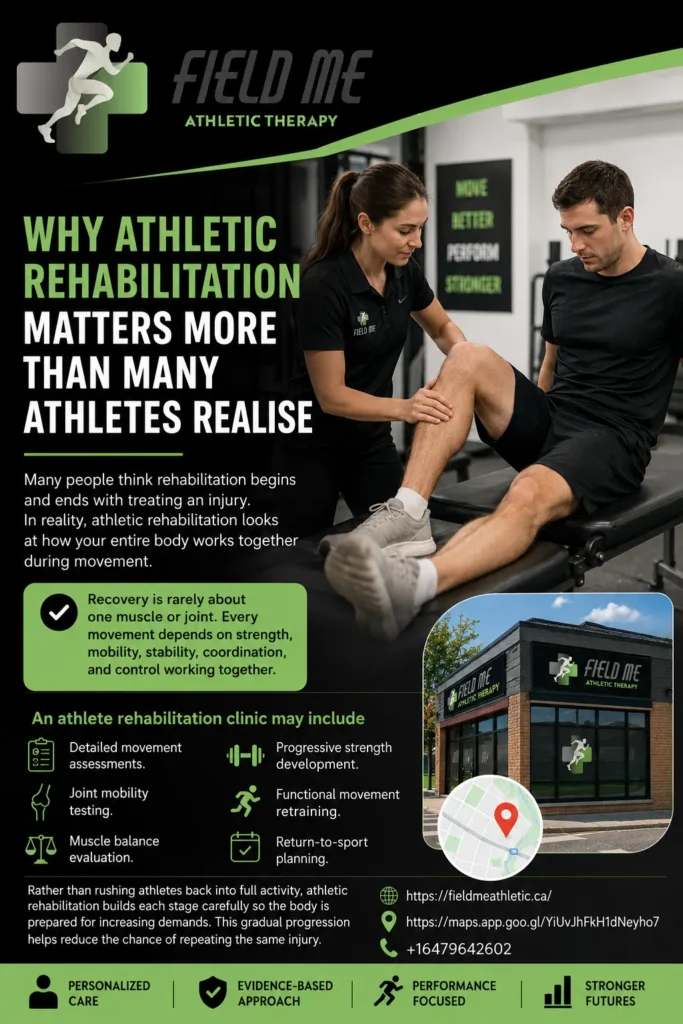
Rather than rushing athletes back into full activity, athletic rehabilitation builds each stage carefully so the body is prepared for increasing demands. This gradual progression helps reduce the chance of repeating the same injury.
Small Warning Signs You Shouldn’t Ignore
Many sports injuries don’t begin with sudden pain. They often start with subtle changes that are easy to dismiss during busy training schedules.
You may notice:
- Pain that disappears after warming up but returns later.
- Loss of strength during familiar exercises.
- Reduced flexibility.
- Ongoing stiffness after activity.
- Feeling unstable while running, jumping, or changing direction.
- Performance that gradually declines despite regular training.
These signs often appear weeks before a larger problem develops.
An athlete rehabilitation clinic can assess these early changes before they interfere with competition or daily activity. Addressing small issues sooner often prevents longer interruptions later.
Athlete Recovery Challenges in Mississauga

Athletes across Mississauga participate in everything from recreational leagues and marathon training to competitive sports and regular gym sessions.
Busy work schedules, family commitments, and packed training calendars often lead to neglecting recovery. It’s common to squeeze workouts into early mornings or late evenings, leaving little time for proper rehabilitation after an injury.
Weekend leagues, running clubs, strength training, and seasonal sports all place different demands on the body. Without structured recovery, even a minor issue can slowly affect performance over time.
An athlete rehabilitation clinic helps athletes in Mississauga identify movement problems, improve function, and build a safe path back to training without relying on guesswork.
Frequently Asked Questions
When should I visit an athlete rehabilitation clinic?
If pain, stiffness, weakness, or reduced movement continues for several days, or if an injury continues to return, it’s worth having it assessed before it affects your training further.
How does athletic rehabilitation differ from regular physiotherapy?
Athletic rehabilitation often places greater emphasis on restoring movement for sport, exercise, and active lifestyles. Programs commonly focus on strength progression, movement quality, and returning safely to athletic activity.
Can rehabilitation help recurring sports injuries?
Yes. Repeated injuries are often linked to movement patterns, muscle imbalances, or incomplete recovery. Identifying those factors can reduce the likelihood of facing the same issue again.
How long does athlete recovery usually take?
Recovery varies depending on the injury, overall health, activity level, and how consistently rehabilitation is followed. Every athlete progresses at a different pace.
Can I continue training during rehabilitation?
Many athletes can remain active while modifying certain activities. The right approach depends on the injury, symptoms, and stage of recovery.
Do I need a referral?
Often, you can book an assessment directly without a referral. It’s always worth confirming your insurance requirements if you plan to use extended health benefits.
Don’t Let Small Training Mistakes Turn Into Bigger Problems
Small habits often go unnoticed until they begin affecting performance, confidence, or daily activity. Whether you’ve been dealing with recurring discomfort, repeated setbacks, or progress that seems to have stalled, finding the reason early can make a meaningful difference.
If you’re looking for an athletic rehabilitation clinic in Mississauga, contact Field Me Athletic Therapy to arrange an assessment and discuss your recovery goals.
📍 2222 S Sheridan Way #111, Mississauga, ON L5J 2M4, Canada
📞 +1 647-964-2602
A timely assessment can uncover what’s slowing your progress and help you return to training with a clear plan built around your goals.